Camping guides
The 10 brilliant ways Kiwi campers are beating the bowser
)
"Just quietly: we may be entering one of the BEST times to book a camping getaway in years."
New Zealand's autumn is doing what it always does — quietly outperforming every other season. The Coromandel is warm and crowd-free. The South Island is turning gold with beech forests and brilliant skies. The Mackenzie Basin is blushing with lupins and crystal-clear air. Northland's beaches are still warm enough to swim, with barely a soul in sight.
And everywhere you look, the crowds have packed up and headed home. Fuel prices have done what no DOC booking system ever could — cleared the campgrounds out. Lucky us.
Holiday parks feel calmer. Freedom camping spots feel bigger. Camplify vans are the most affordable they've been all year, which goes a long way toward offsetting what it costs to get there.
The one catch, of course, is the bowser. With petrol costs being pushed higher by global oil market volatility, it's changed how New Zealanders are thinking about their next getaway. The good news: there are smart ways to have a brilliant trip without pumping half the budget into the tank.
TL;DR
Explore your own backyard. You live 2 hours from some of the world's best campsites.
Skip the tow. Have a caravan delivered and drive your own fuel-efficient car to the site.
Pick the right van. Small campervans use 8–11 L/100km; a 4WD towing a big van can hit 24. The gap is enormous.
Petrol or diesel? Know the difference. And don't forget diesel in NZ comes with Road User Charges — factor those in.
Stay longer, move less. One great basecamp beats four overnight stops.
Split the bill. Four adults in one van = the cheapest per-head holiday going.
Stack the discounts. TOP 10, Camplify off-season rates and holiday park deals are stacking up nicely right now.
Use Gaspy. Fill up off the main highway and save 20–30c a litre.
Go free. DOC campsites start at $0, and in autumn they're emptier than they've been all year. Self-contained van = your accommodation costs almost nothing.
Go short. A 90-minute drive to the right spot will beat a five-hour slog every time.
The 10 hacks to stop feeding the servo next camping trip
1. Reminder: You live two hours from some of the best campgrounds on earth
)
Aotearoa is the envy of the world. People fly from the other side of the globe to camp where you can be in under two hours. It's easy to forget that when you're caught up in the daily grind — but right now, with the crowds gone and off-season rates in full swing, your backyard has never looked better.
From Auckland, Waipu Cove, the Coromandel and Raglan are all within striking distance. Waipu Cove — voted New Zealand's best beach two years running — is just 90 minutes north. From Wellington, the Wairarapa wine country and the Kapiti Coast are an easy escape. From Christchurch, Hanmer Springs, Akaroa and the Mackenzie are all within two hours. From Dunedin, the Catlins coastline is practically next door.
A shorter drive doesn't mean a lesser trip. It means less money getting there and more time actually being there — longer walks, a second glass of Marlborough Sav with dinner, a slow morning past seven.
2. Have the caravan delivered — don't tow at all
)
This is the option most people don't realise they have, and it may be the single biggest fuel saver on the list. Plenty of Camplify owners now offer delivery straight to your holiday park or campsite. You drive your regular, sensible, fuel-efficient car to the destination. The van is set up, levelled, awning out, and waiting when you arrive. No tow vehicle, no white-knuckle reversing down a gravel road, no 24 L/100km blowout.
The numbers land hard when you run them. A 4WD towing a big twin-axle caravan chews through roughly 18–24 L/100km. A family hatchback on its own? Closer to 6–8. On a 300 km round trip, that's the difference between a $60 fuel bill and a $160+ one — before you've even counted the cost of owning a tow vehicle.
Browse vans with delivery available and filter to your campground. If the owner is nearby, the delivery fee is usually modest — because they're barely driving, which is kind of the whole point.
3. Choose the right van for the job
)
If you are driving, the single biggest variable in your fuel bill is what you're towing or driving. Small campervans are dramatically more economical than large ones, and the difference between a HiAce pop-top and a 4WD towing a big caravan is the difference between a cheap trip and a blowout one.
Here's a rough real-world guide to what different setups actually use on New Zealand highways:
RV type | Rough economy |
|---|---|
Small campervan (HiAce, Transit Custom, VW T6 pop-top) | 8–11 L/100km |
Mid-size motorhome (Fiat Ducato, Mercedes Sprinter) | 12–16 L/100km |
Large A-class motorhome | 16–20 L/100km |
Mid-size SUV towing a small single-axle van (14–16 ft) | 13–16 L/100km |
4WD towing a large twin-axle van (20 ft+) | 18–24 L/100km |
Look for smaller 2–4 berth vans built on common delivery-van platforms. If you're after a caravan, size matters: a lighter single-axle van in the 14–16 foot range is noticeably more economical than a big twin-axle rig. And if you're towing with your own vehicle, make sure the van sits comfortably within your tow capacity — pulling near your limit burns a lot more fuel than towing well within it.
4. Petrol or diesel? Match the fuel to the trip — and know the RUC rules
)
This one matters more in New Zealand than almost anywhere else, because of how diesel is taxed here. Unlike petrol — where the fuel excise duty is built into the pump price — diesel vehicles pay Road User Charges (RUC) separately, based on kilometres driven. Rental companies typically pass these on at around $0.08–$0.09 per kilometre. On a 3,000 km trip, that can add $240–$360 to your bill before you've bought a single litre.
That doesn't mean diesel is always the wrong choice — its better fuel efficiency often pays off on longer hauls or heavier rigs. But for shorter weekend trips in a small campervan, a petrol vehicle frequently works out cheaper once RUC is factored in.
As a rough guide: weekend trip in a small van = petrol is likely your friend. Two weeks on the South Island, or any serious towing — diesel efficiency may pay off over the longer distance.
You can now filter Camplify search results by fuel type, so you can pick the right engine for your trip before you book.
5. Stay longer, move less
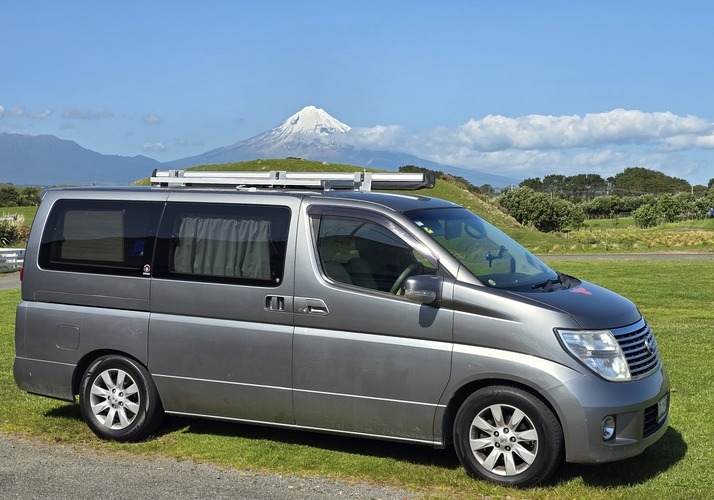
) When your campsite looks like this: you'll never be in a hurry.
When your campsite looks like this: you'll never be in a hurry.
One of the quietly brilliant things about the off-season is how easy it is to secure longer stays at the spots you actually want. And four nights at one good campsite will always beat four one-nighters at four different ones — less fuel, more firewood, better sleep, and no packing the van down at 9am every morning.
This is exactly the kind of trip that suits a campervan or motorhome. Set up once. Unpack properly. Day-trip by car if you've driven one, or walk from the van if you had it delivered. New Zealand's autumn rewards people who slow down — the light is better, the crowds are gone, and you actually notice the details.
6. Travel with mates and split the cost
) What's better than a camping getaway? Simple: a camping getaway + four of your best mates. It's funner & cheaper.
What's better than a camping getaway? Simple: a camping getaway + four of your best mates. It's funner & cheaper.
Four adults in a six-berth van splits the fuel bill four ways — and the hire fee, the holiday park site, the groceries, and the firewood. What feels like an expensive solo weekend becomes the cheapest per-head holiday going, the moment you add a few more people.
Browse with that in mind. A larger van shared across a group almost always works out cheaper per person than two smaller ones. And the social side of a shared campfire on a crisp autumn night probably doesn't need selling.
7. Stack the savings — they're the best they've been all year
)
The best-kept secret of the quiet season isn't the weather or the empty campgrounds — it's what's happening to prices. With the summer rush over, holiday parks and hire platforms are running their best off-season rates of the year.
A quick snapshot of what's deals you can find right now:
Camplify — off-season rates are at their lowest. Check current owner promotions before you book.
TOP 10 Holiday Parks — Members save 10% on stays at campsites across 49 parks nationwide. A two-year membership costs just $55 NZD and pays for itself quickly.
Five minutes of browsing before you book and the savings often cover a significant chunk of what the drive was going to cost you.
8. Use Gaspy — and fill up off the main highway
)
New Zealand's state highways are not the place to buy fuel. Service stations along popular tourist routes routinely charge 20–30c per litre more than a servo five minutes off the same road. On a 70-litre fill, that's $14–$21 back in your pocket for a small detour.
Gaspy is the go-to app for finding the cheapest fuel near you — it sources pricing from 1,700+ stations across the country, updated daily. Free, easy, and genuinely useful. A few minutes of planning before you leave home and you'll save more over a trip than almost any other tip on this list.
9. Go free — DOC campsites and freedom camping are having a moment
)
When fuel costs this much, cutting your accommodation costs to near-zero changes the whole equation. And right now, that's easier than most people realise.
New Zealand's Department of Conservation manages more than 300 campsites across forest settings, lakeshores and sandy beaches — ranging from completely free basic sites through to serviced campsites at just $10–$15 per night. In summer, the best ones get snapped up fast. Right now, in autumn, many operate on a first-come, first-served basis with barely a van in sight.
Some of the standouts worth putting on your list: Uretiti Beach (Northland) — a DOC campsite tucked among sand dunes with direct beach access, a classic North Island spot that hums in summer and breathes in autumn. White Horse Hill in Aoraki/Mt Cook National Park — basic facilities, $15 per night, and sitting inside an International Dark Sky Reserve for stargazing. Dawson Falls in Egmont National Park — perched at 902m with views to match. On the South Island, Twenty Five Mile Stream — a free DOC campsite on the road to Glenorchy, just 30 minutes from Queenstown — delivers mountain ranges and pristine Lake Wakatipu on your doorstep at no cost at all, as long as your vehicle is self-contained.
10. Go short — seriously, your backyard is that good
)
We saved the most obvious one for last because it's the most overlooked. The single most effective way to spend less on fuel is to drive less of it. And with New Zealand's campgrounds at their quietest and most affordable right now, there has never been a better time to remember just how close the good stuff actually is.
You don't need to drive to the other island for a memorable trip. Sometimes the most underrated spots are the ones closest to home — the ones you keep meaning to visit properly but always drive past on the way somewhere else. This is the season to stop and stay.
Browse campervans, motorhomes and caravans near you
Start searchingThe information in this blog is accurate and current as of the date of posting. Please be aware that information, facts, and links may become outdated over time.